
Optimize your Beekeeping Potential
FEATURE
Under Bearts Red Veil
The struggle for a peaceful nights work with his bees – under the veil of troublesome camping headlamps capable of projecting red light but with great inadequacy and inefficiency – led PETER BEART to ultimately design and make his own red light kit – now available on commercial scale.
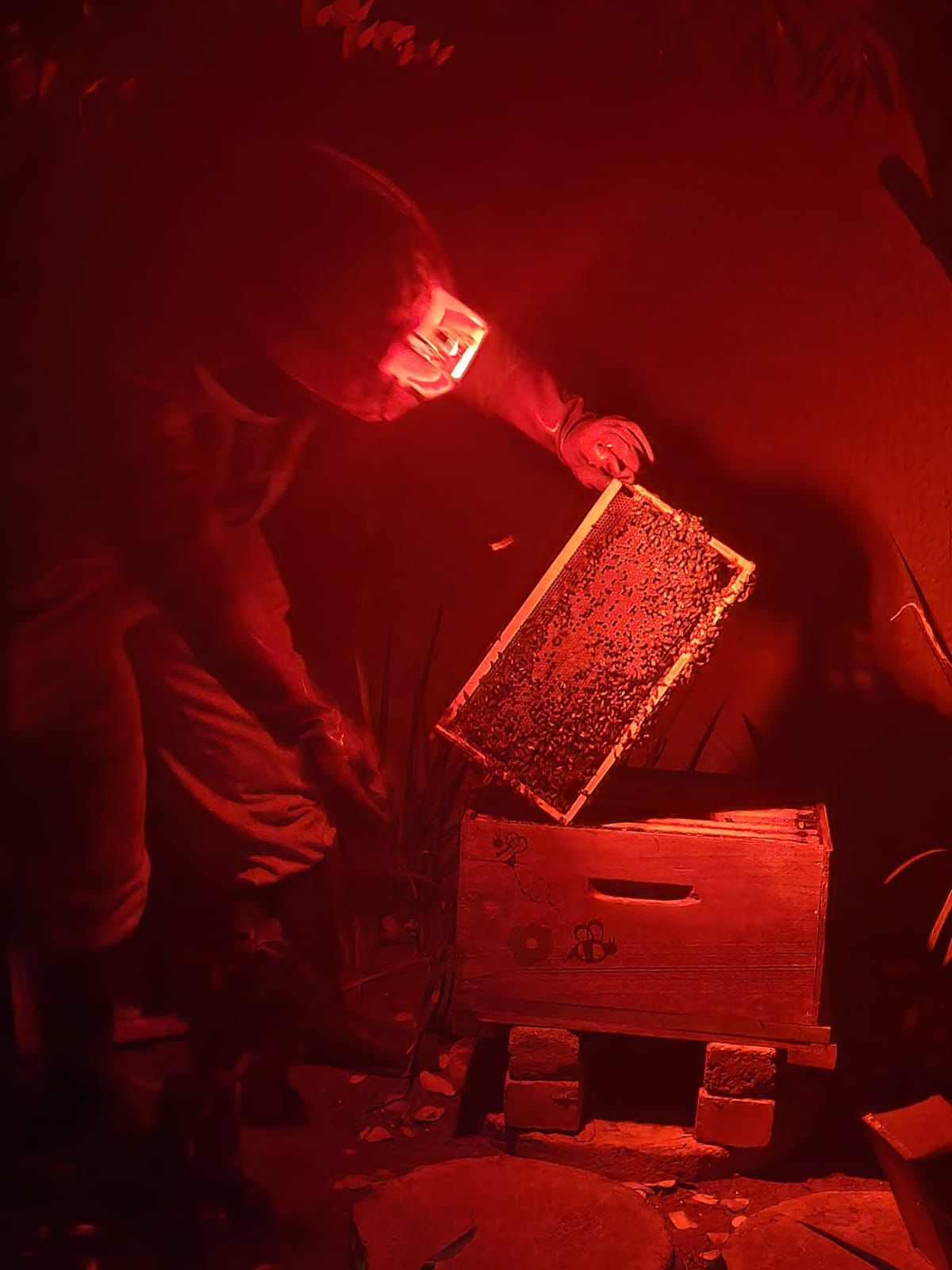
Let’s first talk about RED – when working with bees and for reversing the impact of pesticides on dwindling colonies
Our range of visible color is based on combinations of red, blue and green. Bees on the other hand, base their vision on colors of ultraviolet light, blue and green. So as much as ultraviolet light is invisible to us – red is not visible to the bees. And if you still insist on using a white light to work with your bees at night – all you’ll do is to trigger a positive Phototaxis response in the bees – causing them to move directly towards the light source – resulting in ensuing conflict!
Still keeping it red but for another application: Researchers from University of London and UCL (University College London) published findings that the shining of a Near-infared light (at 670nm) on bee colonies – could reverse the potentially deadly impact of pesticides and help stop the global bee decline due to pesticide exposure. Reducing bee death rates and improving cell energy levels, mobility and visual function of animals exposed to neonicotinoid pesticides such as Imidacloprid which are widely used in agriculture worldwide.
CLOSER TO HOME: Meet Pete Beart
How/when did you get started with beekeeping?
Short answer – much later in life than I would now have hoped…. I was visiting my son in Australia in December 2018, he threw a bee suit at me and said dad come see my bees…. That was it! I was hooked! I didn’t even know he was a hobby bee keeper. I returned to South Africa in the January, did a couple of courses, Bee removals with Kai and a beginners bee keeping with Mike Alter…. In that order (always had a problem with carts before horses etc). By the end of that first season I had around 60 colonies from removals, some of the early ones even produced a honey surplus.
What’s the nature and scale of your operation?
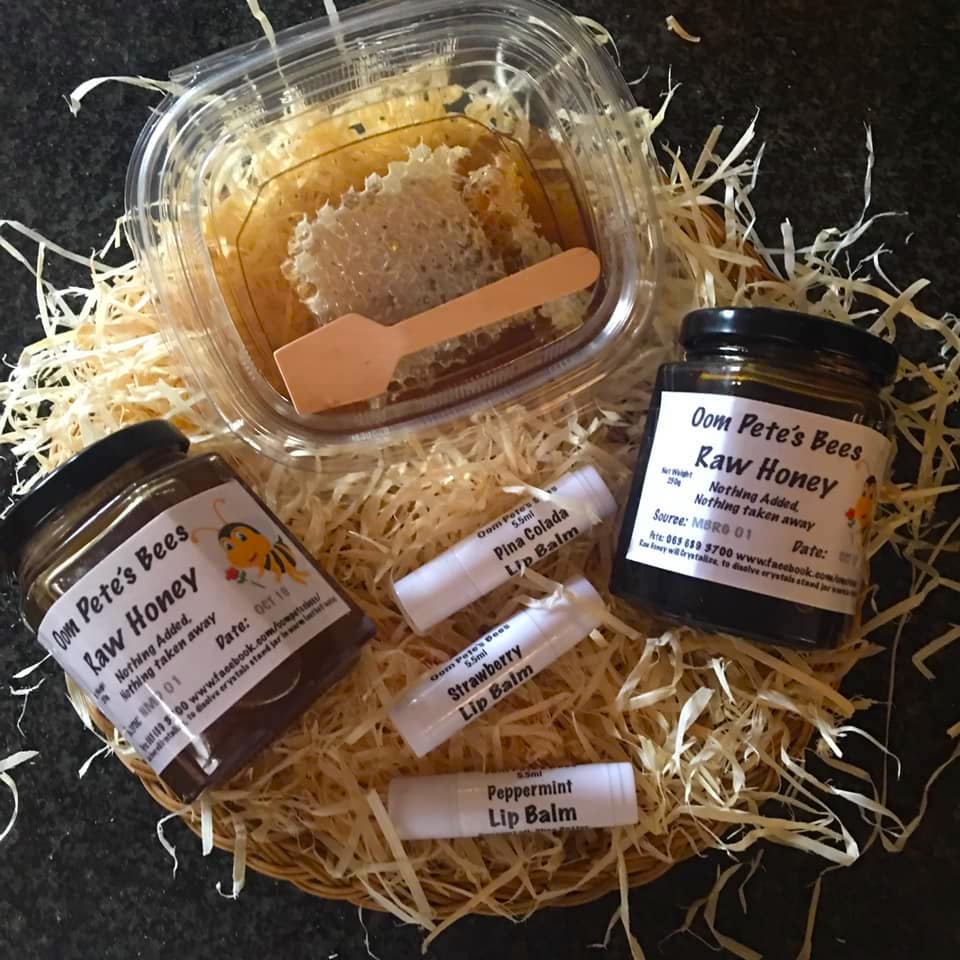
Bee removals have taken most of my time and efforts, specially during the first couple of seasons, I have dabbled (Much to my own personal expense) on Blueberries pollination but hope to learn more and get that right in the future. But now with about 150 colonies, and over 2/3rds of them producing, time is money they say. Honey is now becoming an income factor, and I have a number of distributors assisting with that, from homeopaths rooms and Day Spas, to delicatessens and Coffee shops, in addition to the social media direct selling. I also supply bees wax furniture polish and an assortment of flavor’s of lip balms using my girls bees wax.
About “Oom Petes Headlamp”.
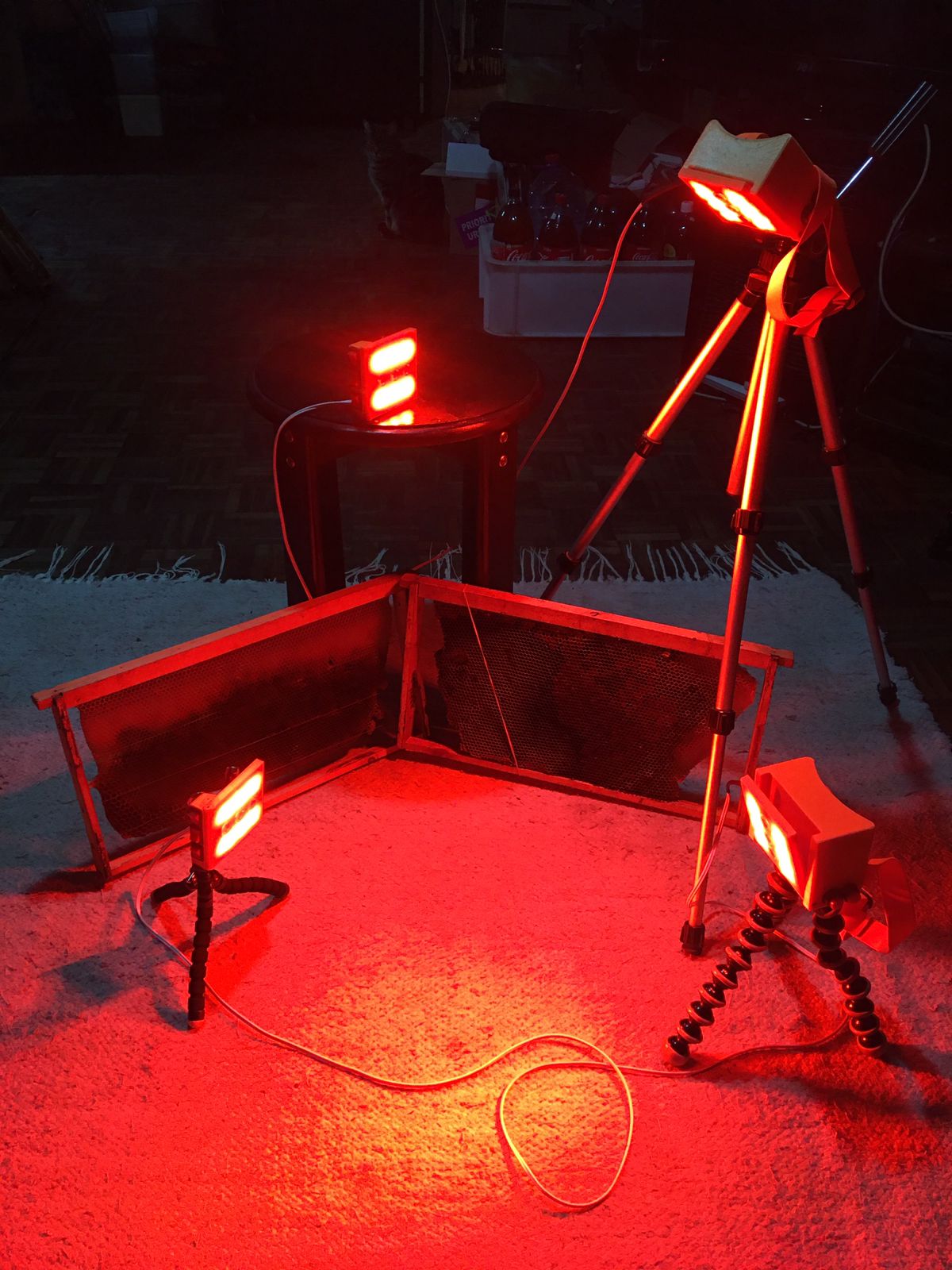
My Head lamp light system is a self contained worklight with both red and white lights, that can be head or tripod mounted, with the idea of providing enough red light to work by – and then some. I also found sometimes I needed even more light, under that floor or well into the eves etc, so I also use a loose light that plugs into the head lamps power to give that additional light where its needed.
I had bought, used and broken a number of the small head lights that have great white lights but only very small and ineffective red lights, I needed more light, I tried red filters on flood lights but it cried out for a proper job.
I designed the light to basically give enough light to work by, (particularly for removals) I had been looking for high powered leds for some time, then when a fellow keeper and friend located some. Well, then the game was on to design a simple and self contained housing for them and their power supply.
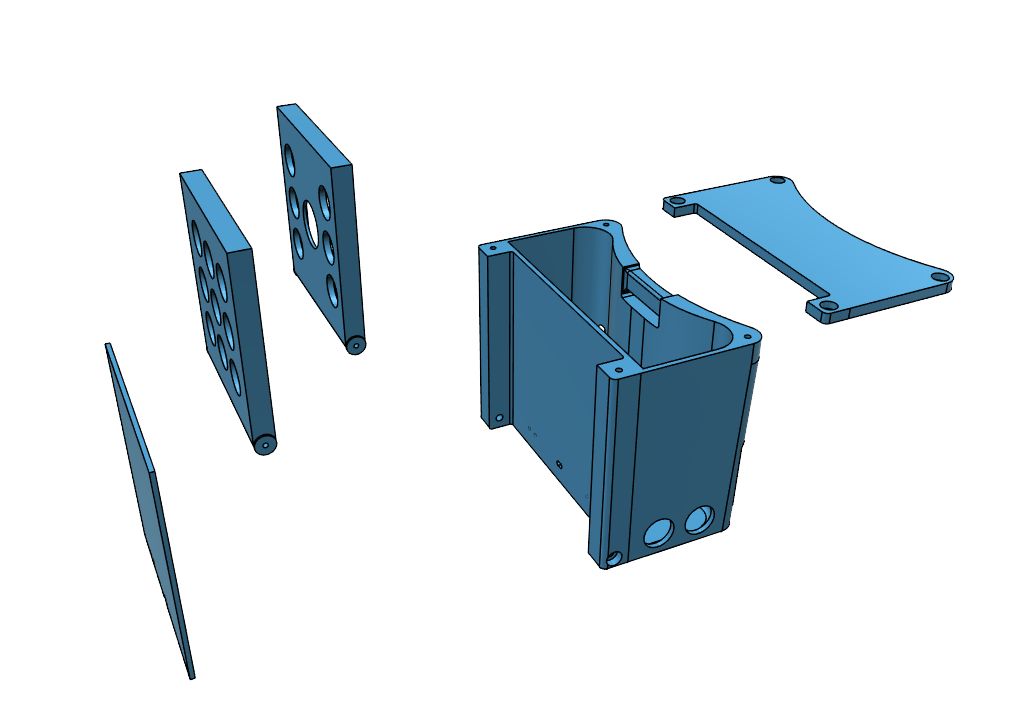
My first prototypes where big and bulky using batteries I sourced just to prove the leds, but they proved the effectiveness of the leds power, One housing design got 3d printed and never even got wired up (must be the Elon Musk in me). Only after a show and tell at one of our association meetings (EHBA) when I had interest in purchasing the light did I consider manufacturing for selling.
I located smaller batteries and streamlined the design, waited for ever for so called “waterproof” switches, then redesigned it again after using the lights for months in my own removals and apiaries to streamline the assembly process.
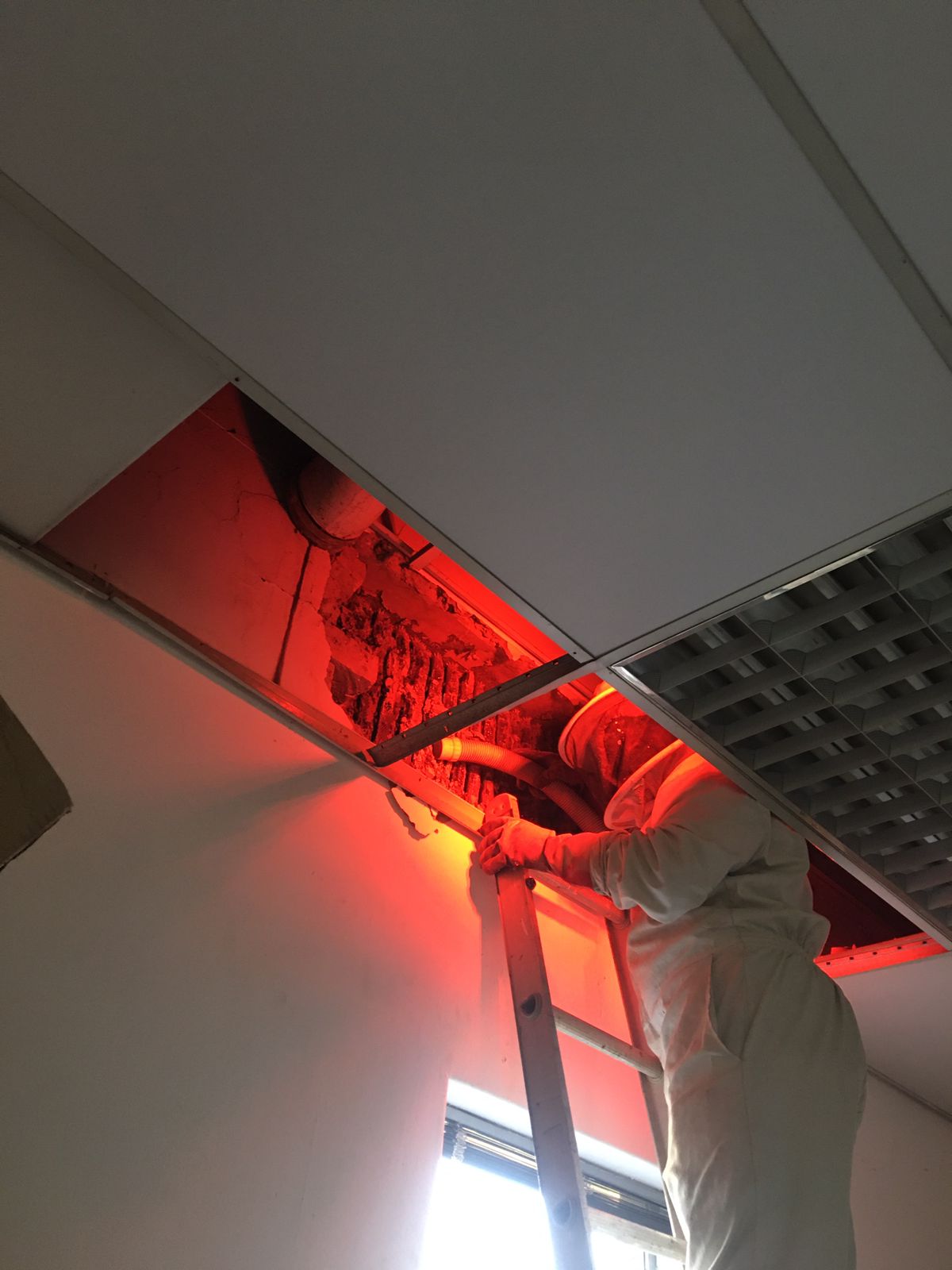
The main benefit of my system it’s designed specifically for our needs, not a camper or a braai master, but A bee Keeper. Who needs a decent amount of red light to work on or remove a hive, with the option of a white lite for checking for eggs or attracting the last few removal bees towards the bee vac. It needed to last several hours of constant use. Actually a bonus that was not even planned is that instead of cutting out like the small (but still expensive) head lamps do without any warning, my head lamp continues for many hours when the battery needs charging providing still way more red light that the other head lights.
Also, whilst we are working in big rubber gloves, that could be quite slippery with removal honey, big switches are also a feature to aid in finding the right switch to control all this light. Being totally manufactured locally and being a recycle fanatic. When the user does eventually try the drop test off the top of the ladder (I’ve done it)! spare parts and a refurbishment is but a phone call and/or courier away. My own drop test resulted in the light still working, for the remainder of the removal and just switches and the moving light section was later replaced. Being head or tripod mounted also adds to the versatility, At least one of my users has bought tripods and now illuminates almost his whole apiary when working.
Where to from here?
I’m the sort of guy who jumps in boots and all, so like many a bee keeper if I see a way of making things easier, or streamlining my processes I will do it and don’t have a problem sharing it.
Also like many keepers I love sharing these amazing creatures, My mentor Mike Alter is going into semi retirement and cutting back on his activities, and has asked for assistance with both his hives, sites and his beginners course. So whilst being a novice in years myself I will be sharing the basics soon with Mikes beginners course, having also lectured for damelin computer school for many years it will be nice to be in that sphere again.
I was a tool maker by trade, specializing in plastic injection moulds, then turned cnc machine tool programmer, cost accountant then management accountant in latter years, so the design and manufacture was second nature.
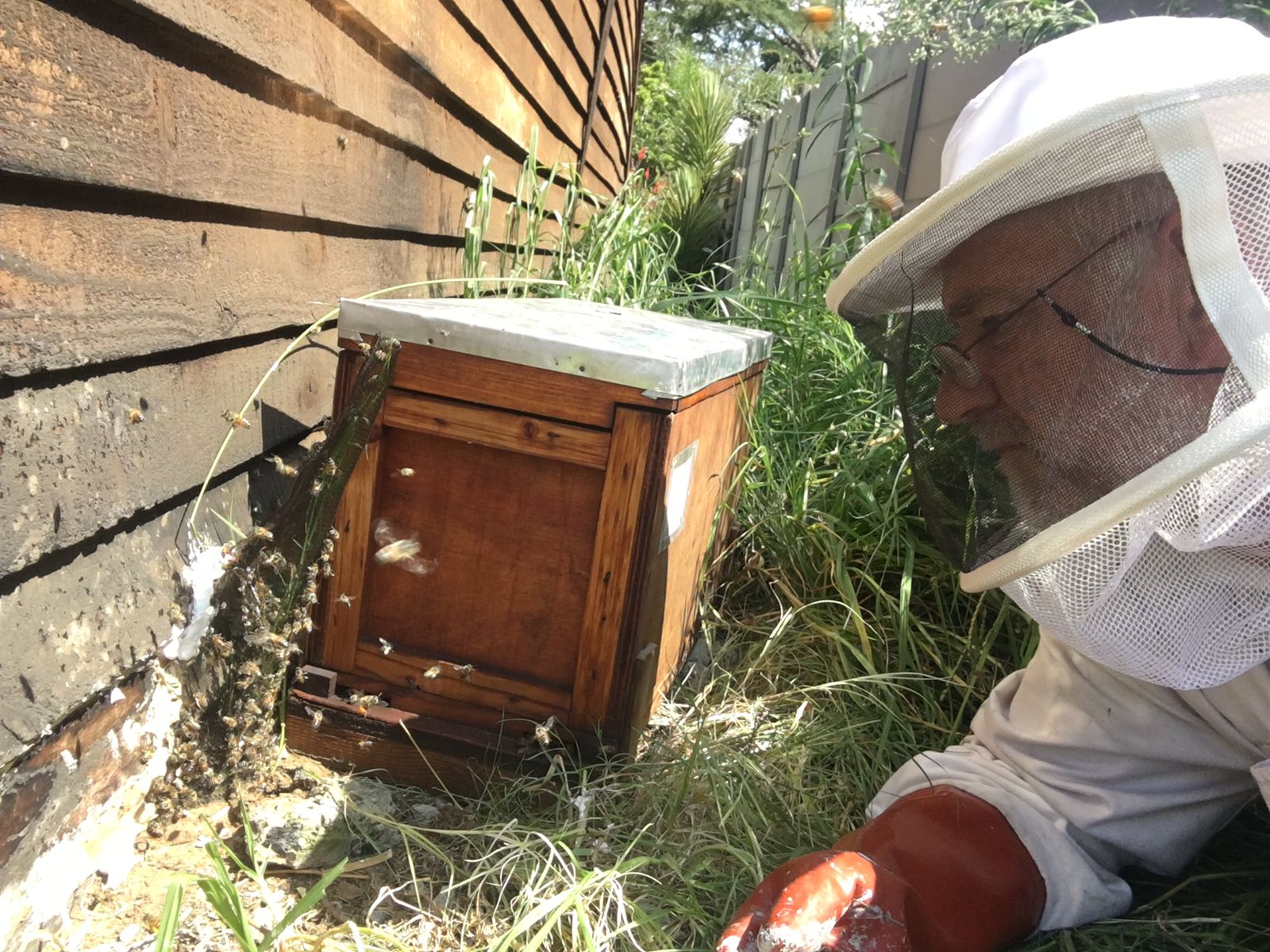
Pete Beart at The hive entrance
Pete is a member of the Eastern Highveld Beekeepers Association in Gauteng. Call/ Whattsup him 063 689 3700 to order you red light kit. Brochure can be found here on this link. Ask for your your 5% Sustainable Beekeeper readers discount when booking your order! Advertising disclosure: The Sustainable Beekeeper is an independent beekeeping industry publication that support industry development through the sharing of innovative ideas and entrepreneurship. This particular article is not an advertorial and is not paid for or sponsored by any individual or organization.The Sustainable Beekeeping Newsletter (curator@beekeeper.co.za)
Well done Pete.
I am really pleased with the purchase of two of your red light kits and make extensive use of them.
I am really supportive of your initiative and proud to be associated.
Keep up your excellent work.
Regards
Len Boucher
Managing Director
Bee Movals (Pty) Ltd
Chairman
Southerns Beekeeping Association