
Optimize your Beekeeping Potential
FEATURE
The Spring Hive Inspection and your future as a beekeeper
If your hives are still populated, then you might just have survived the most difficult season of the year. Hopefully it did not happen by chance – but by virtue of the well calculated informed decisions you made. Let’s talk about that.
This article is part of a series focused on Beekeepers working towards generating income with their beekeeping operation – but still struggling with the basics to get there.
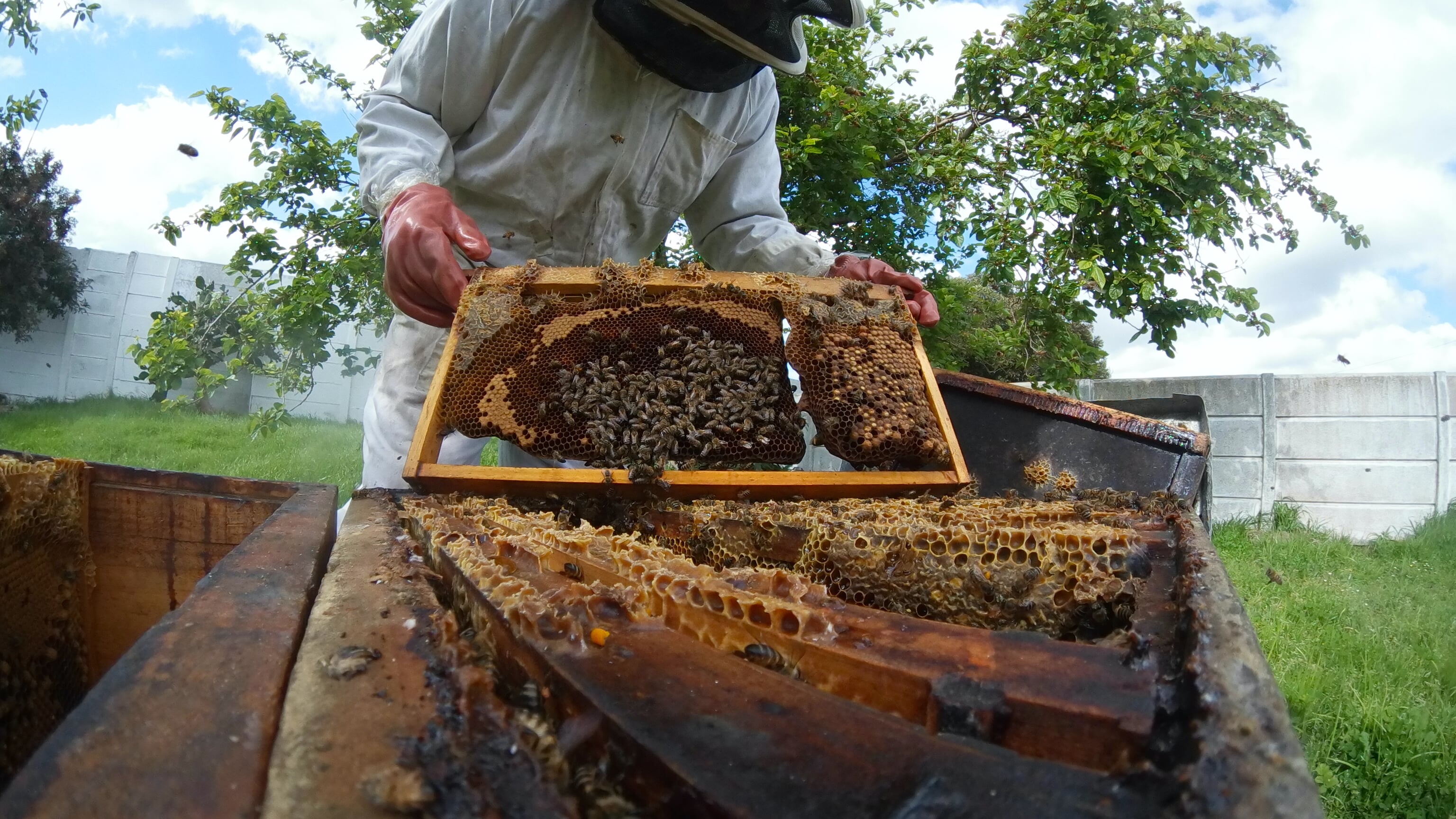
Let’s open up the brood boxes
So you know everything about bees and the workings of a beehive – but instead of your hives increasing in numbers – you are struggling to keep your bees from absconding.
Your beekeeping efforts only translate into more empty hives by the time Spring time arrives.
And if this is you first Spring – then perhaps its time to go and open your brood box before reading the rest of this article.
You need to know whats happening inside the brood box when Spring arrive – in fact, you already had to prepare your bees for it when winter kicked in.
Did your bees survive? Was it by chance or by well calculated informed decisions you made earlier in the year?
What does winter mean for bees?
The days grew shorter – meaning there are less light available for foragers to find food for
the colony. Food sources also grew scarce – so not only do they have less light to forage, but they have to fly further away from the hive in search of forage.
As winter deepens – foragers are competing and almost scavenging on the little that is left in the environment.
A lack of good quality pollen coming into the hive stopped the queen from producing brood. From here on wards, if they do not have enough capped honey stores – it’s only a matter of time before the colony either dies or abandon their hive.
If you found a reliable source of winter forage for your bees – and you know how
to use the winter forage – then the onset of winter might mean nothing more than just another changing season. You knew Spring were 3 months away – and you were already preparing to have your colonies in optimal form for when the Spring nectar windows open.
But all beekeepers do not have access to good winter forage.
Did you have access to winter forage? What kind of forage? What did you use it for – to sustain your bees or was the quality good enough to split your colonies and increase your hives? The early Spring hive inspection will tell the true story not just about your current level of skill as a beekeeper – but what your future holds in an industry that requires hard work, dedication, passion and an absolute commitment to make every resource work for your beekeeping aspirations.
Otherwise, pending in what province you are – and the nature of the forage around you –
winter will mean a time of heavy stress on your bee colonies. Dwindling bee populations and an opportunity for parasites and predators alike to take advantage of a weakened colonies.
So while you were google-ing away, reading on bees – possibly opening your hives a few times to explore with fascination what is happening in the hives – a key question to have answerd was: did your bees have access to winter forage, and if not – did you feed them to ensure that their supplies for winter are stocked up?
Next time, don’t wait for Spring
A good beekeeper does not wait for Spring to replenish his or her colonies. Spring certainly is not the only time when good forage are available for honey production or to stimulate brood production when splitting hives to making increase.
The love of bees inevitably goes with the love of forage.
I myself have become a better beekeeper as result of the South African Beekeeping Forage Calendar. At the time of developing the Forage Calendar – I too had my frustrations with loosing colonies and coming to terms with finding food resources for my bees at odd times of the year across odd locations.
Now in retrospect, it allowed me to have a good understanding of the forage in my area (region/province).
The last thing you want to do is to spend money and buy sugar to feed your bees in preparation for winter. Rather use the S.A Bee Forage Calendars to study and master the bee forage opportunities for winter in your Province.
And if you definitely do not have access to good winter forage – then welcome to the world of commercial beekeepers. Keep your eyes on the price of sugar so that you can feed your colony to take them through a period of food shortage (such as winter) or dearth (often times in Summer).
Riaan Hendricks is a the creator of the South African Bee Forage Calendars, a freely available strategic planning tool allowing beekeepers command over major agricultural and nature forage in their localities. Resulting in more sustainable beekeeping livelihood practices.