Optimize your Beekeeping Potential
CURRENT FEATURE
Brewing Meads of Note with Eddy Lear.
If you do bee removals – you are almost readily supplied with the free raw materials for making mead: possibly unripe honey and combs with brood, pollen and all – and if you add some imagination or just explore your local indigenous traditions of mead – you’ll discover amongst a long list – meads ranging from Vhinya ya vulomba – made with Marula fruit to Karri//iQhilika produced by the addition of peeled Trichodiaderma roots – all of which presents itself as a lucrative additional income opportunity for our beekeepers: A cause championed by EDDY LEAR, a Mead Judge and writer of the APIMONIDIA limited edition book SOUTH AFRICAN MEAD NOTES.

PIC: Eddie Lear Judging the bouquet of mead
“The biggest benefit on mead making goes to those who do bee removals, but also when you scale down and take honey out of brood areas to invigorate the bees into producing wax for new comb at spring. It is known as “All Hive” mead. Effectively a chap does a bee removal, but the honey is unripe, so can’t be used for honey production. By adding water to a ratio of 50%, mixing it all up well (incl brood if there is) and just covering the bucket with cloth. After 3 days fermentation should have started. If just left for a year, one will discover the magic of mead, but most people can’t wait a month never mind a year.
At spring I extract the honey out of the old brood combs, break them up. I have worked out that the cocoons in the cells hold back a fair bit of honey. I weigh out 25 kg of wet comb and assume 38% of the weight is honey. So I place this into a bucket with 9 to 10 litres of water. I add fresh bee bread or pollen in the comb. About a desert spoon full of pollen is good, Mix this all in and allow nature to take its course. I might seem too simplistic and I know many people due to their misgivings mess it up. SAMMA is running a mead competition this year at the Royal Show ground in Pietermaritzburg. On the 28th July I will again do a demonstration and inaugurate the KZN Chapter.
Now there is a Tsonga tradition of mixing honey with marula fruit to make a mead;- Vhinya ya vulomba. I have been trying to get that recognised and placed in the Mead Regulations. There were a number of changes we requested, which were accepted by the Wine & Spirit Board director, but the department has put it out for comment to the Wine fraternity. So we hope the minister will sign the requested changes in March. It has been 2 years of patiently waiting.”
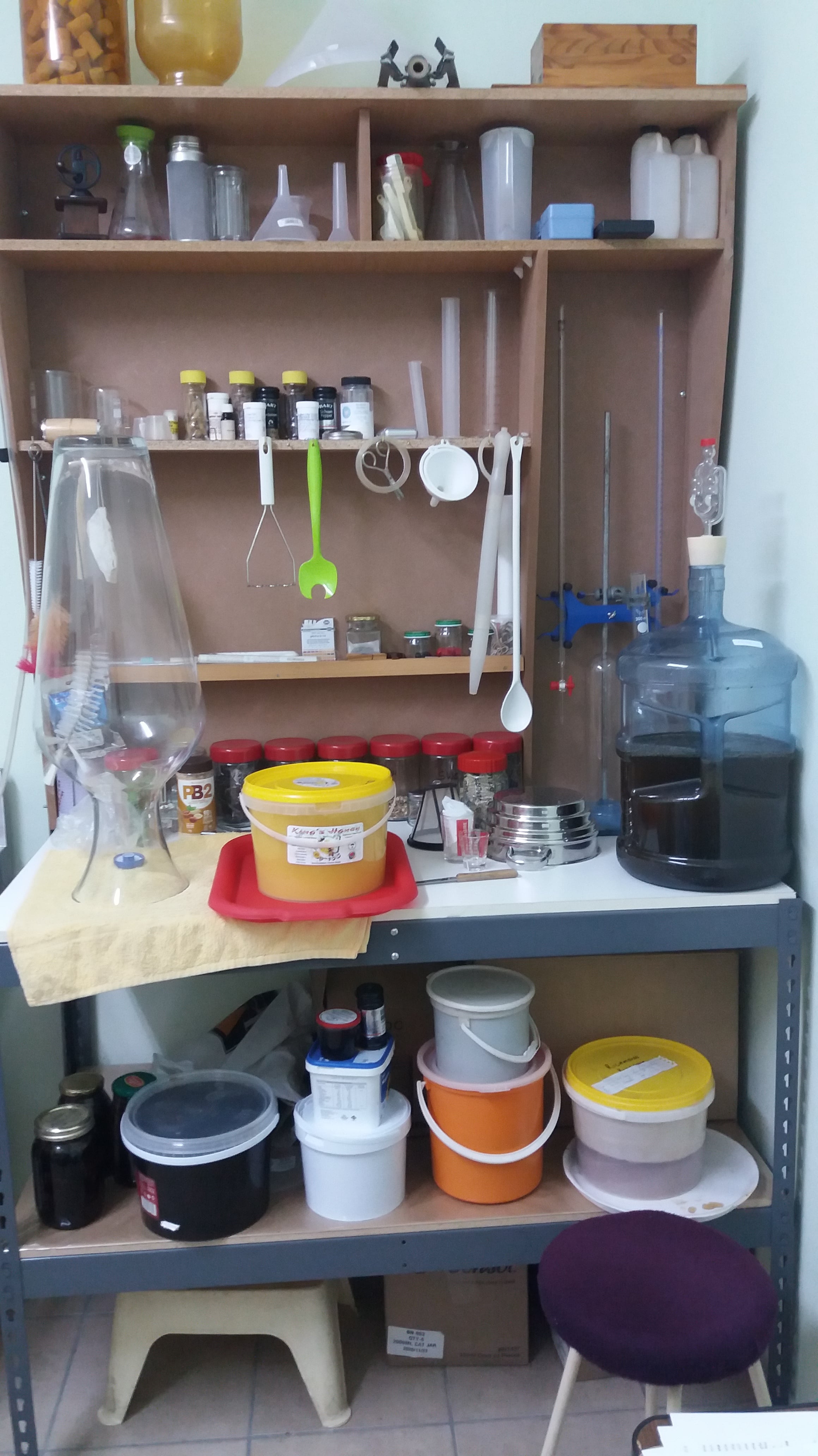
PIC: His mead work bench
What is the nature of the market opportunities for mead?
Currently very poor when comparing with wine. Grape juice is about 20x cheaper to the wine industry against honey to the mead industry. However, Ethiopia use 80% of their harvested honey to produce T’ej. Having said that, I sell on demand. If there is great demand the price goes up. My signature meads are Pepperdew, Rhodomel and Christmas cake Weirdomel. I sell these for around R300/750ml bottle.
Costs vary according to volume made, but the biggest volume I ferment is 100litres, which take 45kg of honey. If you make a session mead you will most likely have better returns as it is low alcohol. 50 litres of rain water mixed with 45kg honey costs about R4500 if buying price is R100/kg. So it could cost R45/litre with selling price at least R150.
We have Dragman Brewery in Pretoria, Makana Meadery in Grahamstown, Red Viking (Cape Mead) in George and Melaurea (Cape Town Meadery) in Maitland, all of who export most of their mead. Local sales is low because mead is not known. However in the 90s when I first got involved the USA hardly produced 90 000 gallons per annum, whereas in the last 10 years it is compounding on its demand exponentially.
So who knows how long it will take for SA to be in a similar state.
Currently the commercial meaderies mentioned above sell through bottle stores. Red Viking has its own shop. The rest of us many sell mead at meetings. We do plan to get festivals on the way in the near future. But having said that the home brewing industry has grown exponentially after Covid laws prohibited sales. I think this will decline once the laws are rescinded.
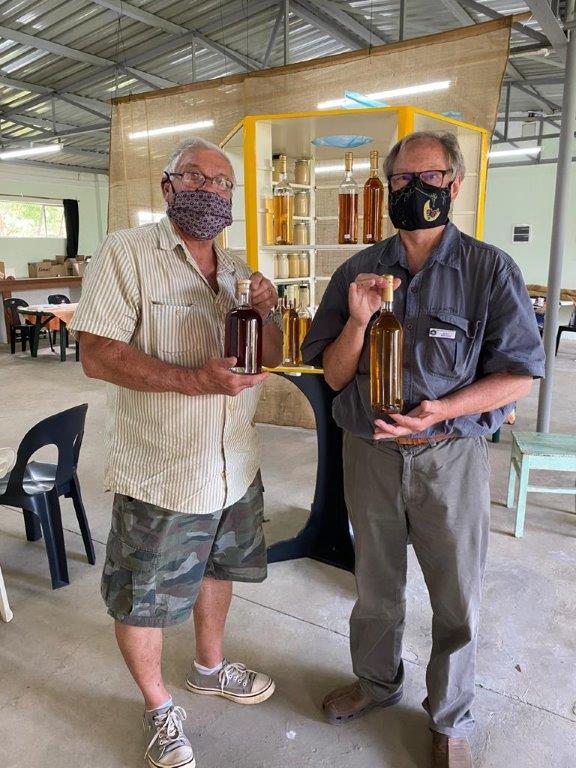
PIC: Late Arie Dercksen and Eddy Lear at the National Competition where Eddy attained 100% for his sweet mead.
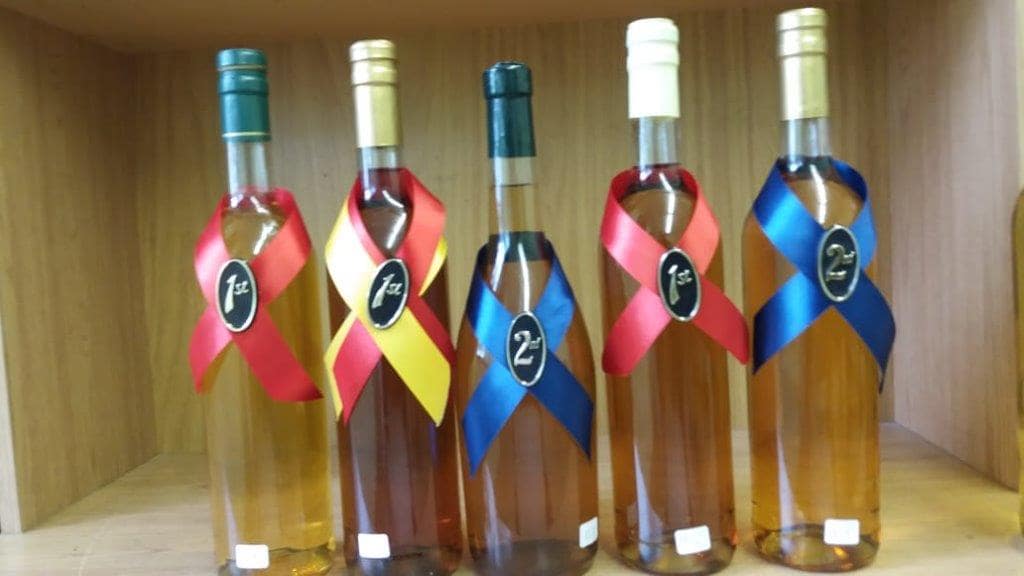
PIC: Line-up of his winning meads at a 2020 competition – with a 100% double ribbon.
“As one of two mead judges in this country, my preference is monofloral honey traditional mead. My next could be said as hippocras because the sky is your limit as to the various herbs and spices that are used. Melomels have become very popular, but we want to throw caution as the trend in the USA is to dominate the fruit over the honey. Our regulations stipulate that a maximum of 50% fruit can be used. Some of the best melomels are made from litchi fruit and litchi honey. Chilli mead is superb. My first taste of it was at Tintangel, Cornwell, UK, of a Chilli mead. I was hooked, hook line and sinker. I have made superb hippocras using rosemary and mint. I have done a peanut butter mead, which is nearly ready for bottling. I love it. But I usually only make 4.5 litre batches in my experimental meads. As there is a demand for one, then I’ll make bigger batches.”
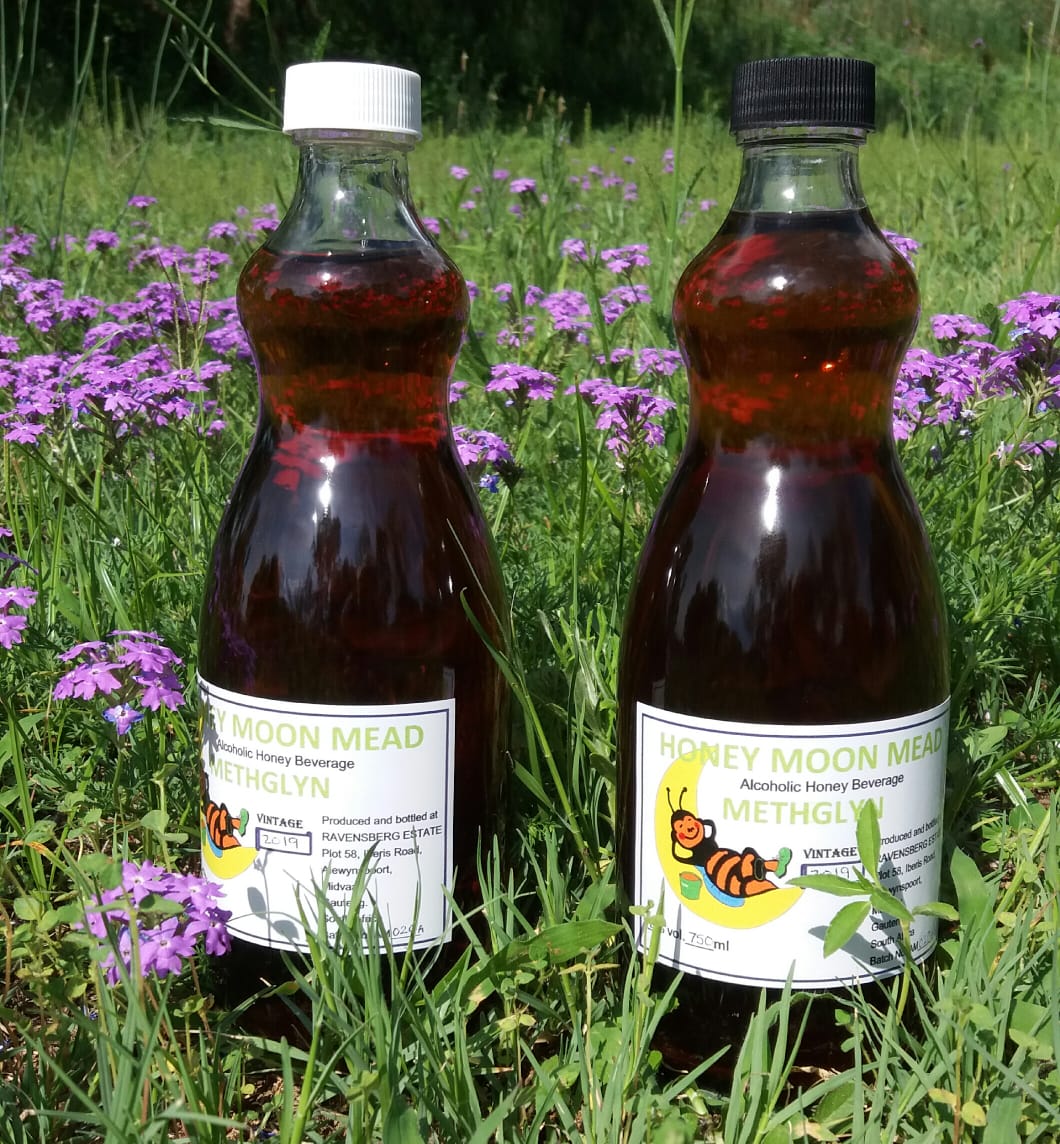
PIC: Some of the mead labels produced by Lear
What legislation must to be taken into account when producing mead?
This is about to change. At first in 1993 SAMMA was made the registering body, then in 1996 it changed to DAFF and now to DALRRD. But that is going to be done away with when our new additions or changes to the regulations is signed into law.
There are licensing issues which is not followed by the non-commercial meaders. The producers license costs around R15k which immediately means you need to make more than 40m3 per annum.
Then there are other licenses, which all cost money. Ernst Thompson of Melaurea has agreed to help members get going by working under his license. So all the other legislation applicable to wine and spirits are there with the mead regulations being almost an addendum.

Please talk about the history of your book – the chapters it covers. How you ended up writing it. Where to buy/download it?
Before 1990 I had never heard of mead before, now I’m being asked to legalize it. I was asked to write articles for the SA Bee Journal on mead and the members of SAMMA suggested I put the chapters together to make a book. In 1995 I had also won the bid to host Apimondia Congress in South Africa in 2001. 1997 was the year of 100 years of Apimondia in Antwerp the founding city. I was on the executive council and used to attend meetings twice a year, normally in Rome. So at that time Apimondia had a publishing house in Bucharest. The director asked me if I had anything they could print for the centenary?
So I mailed the document through to them for their perusal to find out if it would be acceptable. Then I heard nothing for 3 months so contacted them again, because I wanted to add photos, especially for the cover if they were interested in printing it. The reply came back too late already printed. So to revert back to the beginning, because the bee industry had tasked me to get mead legalised in SA, I needed to know what it was. The government also wanted to know the worldwide output. So I started to make mead and study everything I could get my hands on. So I acquired a nice little library. I was also working for AECI as a project manager in their chemical factories, so even here I was learning a lot about chemicals. In my book I have at the back of the book a comprehensive list of terms. I wrote down everything I was learning to keep a dictionary for myself. This has been the star of the book and I received many accolades for it. So the book gives a history of what I knew at the time on mead. Now of course I know a lot more, but still learning.
In 1996 the regulations were publish ed from what we drew up and so the members of SAMMA lost interest in the association. They had what they wanted and I was now tired of all this extramural activities I was involved with. So in 2000 the association was shelved. In 2017 I was approached by SABIO to have SAMMA resurrected and there were now a number of people who wanted things in the legislation changed. This I did and from 10 members in 1996 to over 250 known meaders in SA.
So my book came out of the closet and sales were good. I have about 20 copies left. So they are only available from me at R350 a copy. Apimondia don’t appear to have any left either.”
The chapters are:
· Fermentation overview
· Equipment used in mead making
· Honey – the most important ingredient of mead
· Water – the next most important ingredient of mead
· Yeast – the power house of mead making
· Keeping the fermentation going, Nutrients
· Sanitation
· Types of mead
· Recipes
· The laws regulating commercial production ofmead
· The South African Mead Masters’ Association
· The history of mead
· To your good health
· Mead Terms
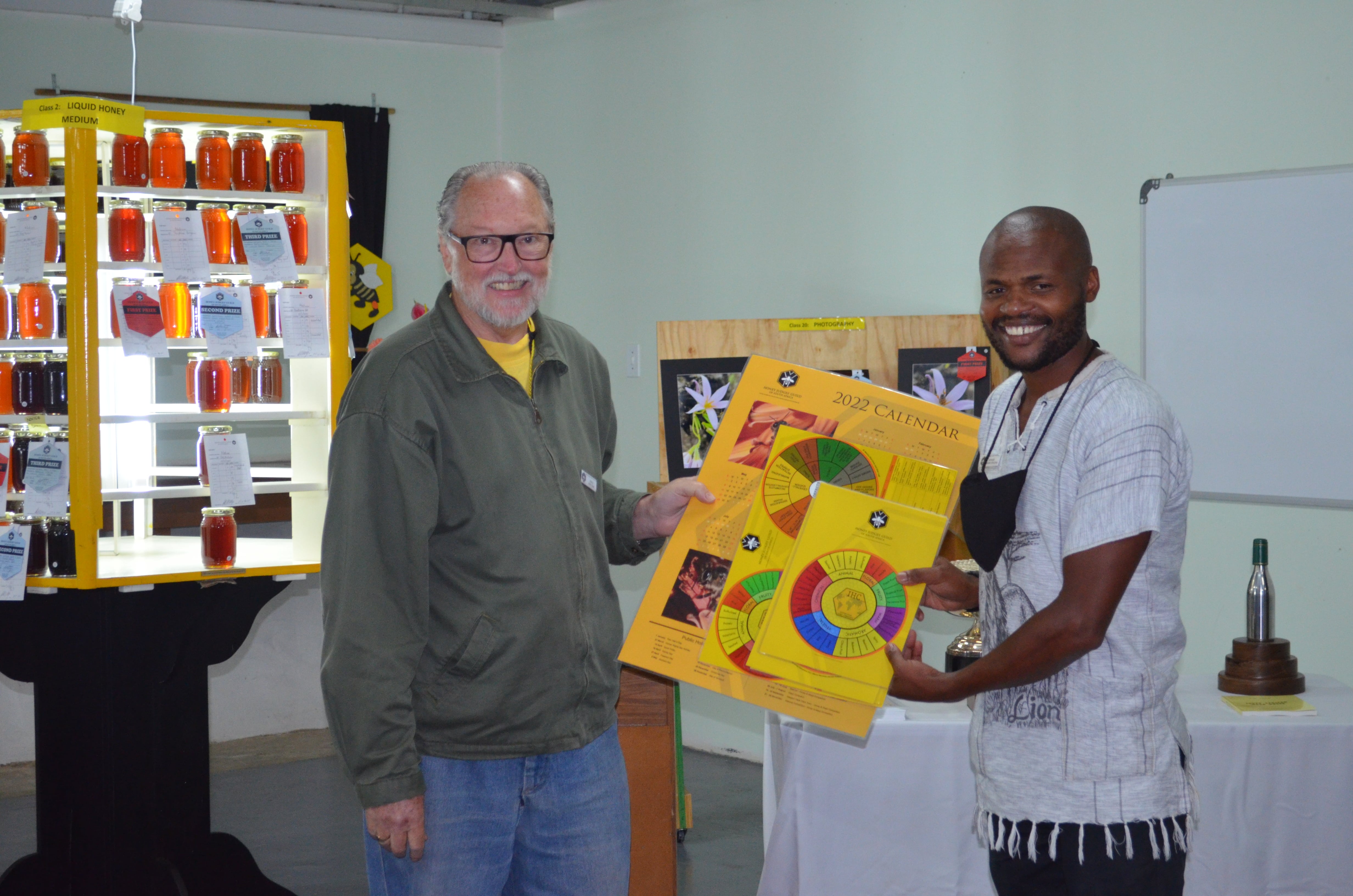
PIC: Eddy presenting tasting charts and a calendar to Sisiphiwo of the Eastern Cape for the superb job done in running the 2021 National Honey and Mead competition.
“Strangely enough I don’t drink myself, but I do taste and give an opinion. It actually helps not to drink as it allows the mead to mature well. My oldest is from 1994. ‘- Eddy Lear
Eddy is an honorary member of Apimondia and the secretary of the South African Mead Masters Association (SAMMA). To join their Association or to order a copy of his book – contact him on 082 752 7090 or eddy.lear01@gmail.com.
PS: On the last Saturday of the month, for those who are fearful of putting their first brew together – Eddy runs a mead brewing workshop. Do contact him.
Advertising disclosure: The Sustainable Beekeeper is an independent beekeeping industry publication that support industry development through the sharing of innovative ideas and entrepreneurship.This particular article is not an advertorial and is not paid for or sponsored by any individual or organization. Do you know of a story of we should cover? A beekeeping industry service provider who could benefit from publishing their offering free on our network? Contact James on curator@beekeeper.co.za.